Thanks for watching another episode of BBTM! This episode featured viewer suggestions as well as pieces I had come across from playing myself recently.
Below you shall find YouTube links to all the recordings featured, accompanied with a small analysis of the trombone moment, and of course the download to the PDF. If you have any suggestions for future episodes, feel free to comment on the video, or drop me an email via the description.
No Home No – WDR Big Band
No Home No is a composition by the extremely talented trombonist Rita Payés, which was expanded out for Big Band by Michael P. Mossman.
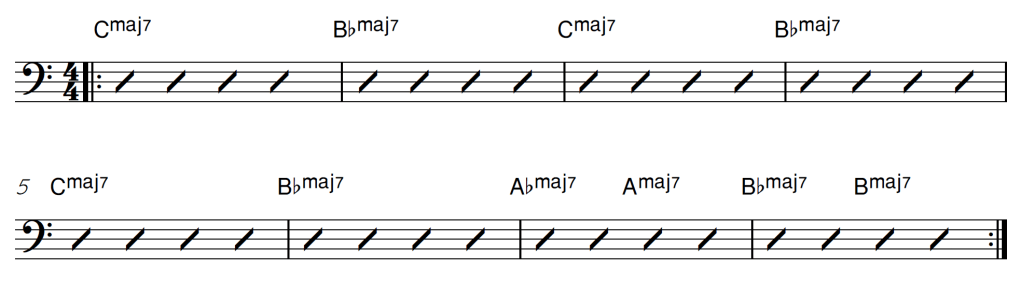
The piece begins with the bass trombone motif; a meaty fifth down to pedal C which Mattis Cederberg plays with ease. The bass trombone also outlines the chord structure, where we shift around major7 chords.
Then, each trombone enters individually with their own counter melodies, occasionally interlocking with another part.
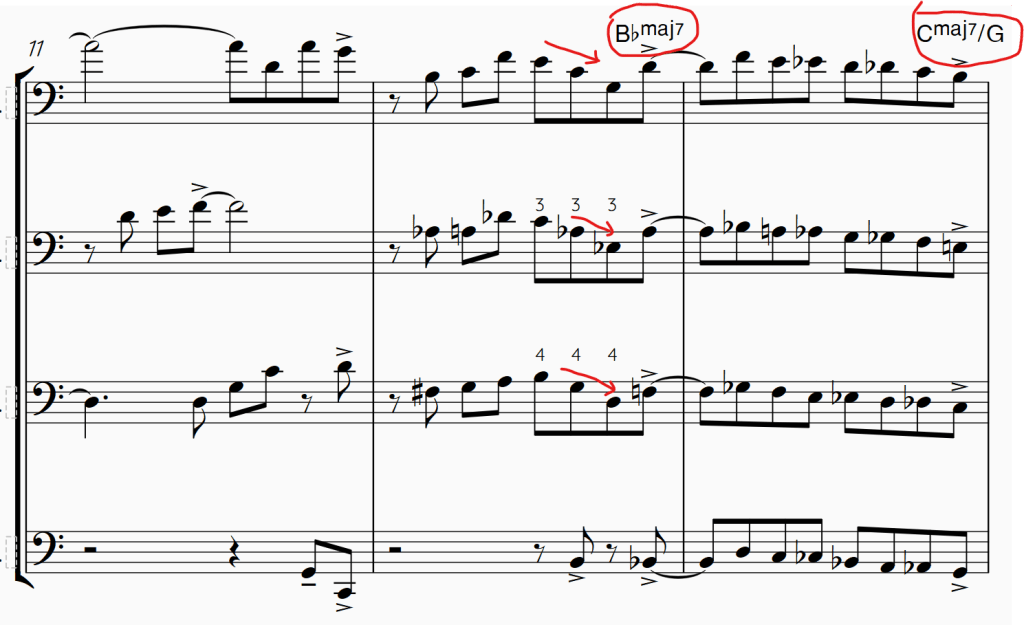
Once we get to measure 11, the top 3 bones play this seemingly clashy eighth note motif, where the 2nd & 3rd trombone are a half step apart for most of the bar. In the recording, this comes across as quite a cheeky moment before resolving to the Bbmaj7 chord into the next measure. As each part is descending quickly, you don’t really notice the pitches of the trombones. Mossman most likely wrote the trombone parts like this to keep the slide movement to a minimum.
After this Bbmaj7 resolution, all bones are finally interlocked with this fantastic chromatic descending line which leads to Cmaj7 second inversion.
Eagle Eyes – The Airmen of Note
From the album AIR Power!, this chart certainly demands the best out these players.
Apart from the superb playing, we hear a range of unison and soli moments which help bring a sort of tension and relief.
In the final 8 measures, the full range of the trombones is displayed. Before this, the bass trombone sits around a third away from the 3rd part, and rarely stepping into it’s pedal range. The 1st and 4th trombone are a whole 3 octaves apart, which really exposes the technical ability of the players, leaving little to blend with. Meanwhile, the 2nd and 3rd part are, at most, only a tone away from each other, providing the crunchiness whilst the respective bones are miles away!

When You Wish Upon a Star – Louis Dowdeswell
This arrangement of a Disney tune from Pinocchio is by Callum Au, an Oxford-based arranger and trombonist.
This piece mainly features 2 trumpets on the melody, but for just 4 measures, we are presented with a soothing trombone soli.
The first trombone sings the melody, where the other trombones accompany with slightly less-active harmonies.
The key moment comes in third measure, where we get a cascading bell effect, outlining an Amaj7#5; a great chord to use if you want a bit of tension during a maj7 chord.

Four Others – Woody Herman & His Orchestra
This piece may sound slightly familiar to you, and you’d be right to think that this is similar to the popular Four Brothers tune; they are both arranged by Jimmy Giuffre!
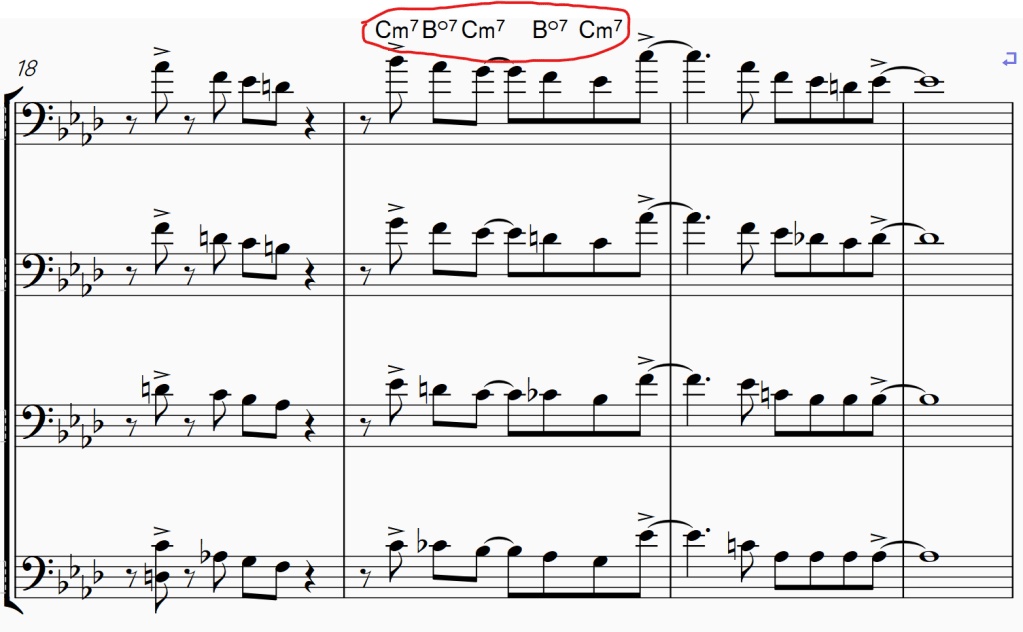
This 32-measure, AABA structure showcases some great essentials and tools in soli writing. In the beginning section, we see the trombones mostly following the outlines of chords with various arpeggios, with the occasional use of the ninth
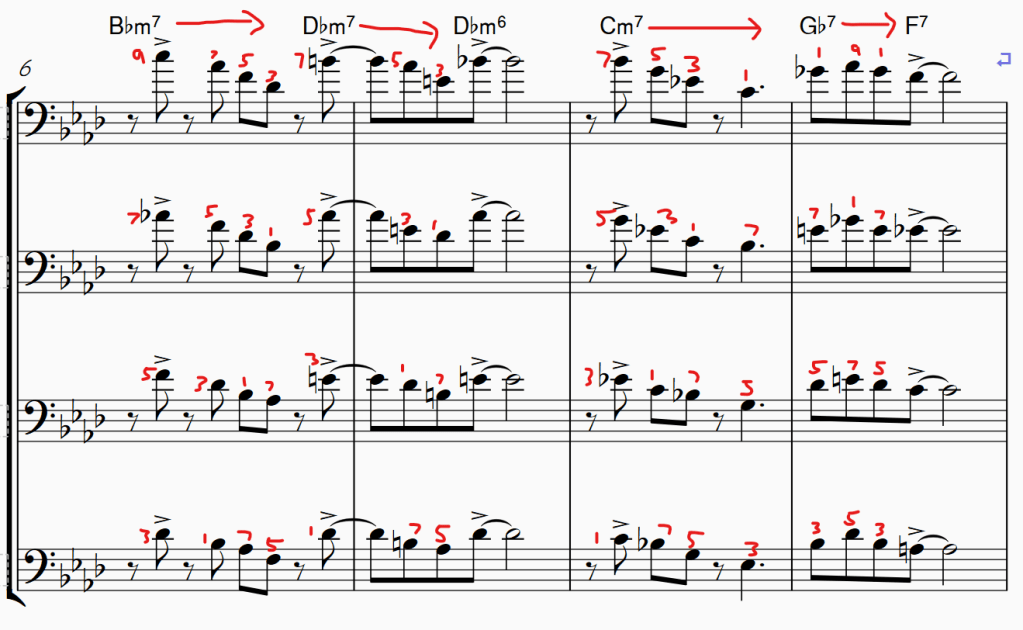
The B section presents a more step-wise melody, showcasing more of these diminished passing chords.
Conspiracy Theory – US Army Blues Jazz Ensemble
Always great to end on a bit of funk! What was different for me was discovering this chart was wrote with 1/16-note swing in mind, instead of 1/8-note which is what I am used to. I was surprised how clear it was to read the rhythms if the notes were properly edited!
This chart features a few modern techniques in it’s writing. Firstly, we haven’t got any backing chords from the rhythm section, which gives a lot of freedom in what Mike Tomaro can write.
One modern technique we see is the use of parallel motion; the intervals between the trombones remain the same throughout this phrase in measure 19.
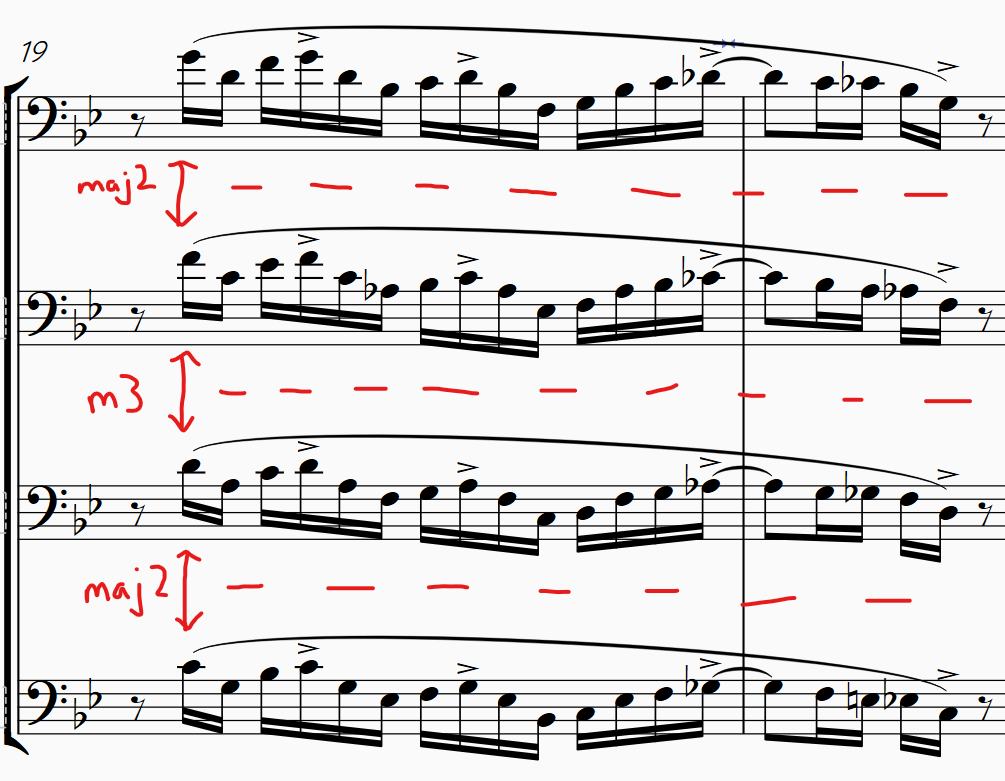
It’s also heard again in measures 23-25, with the tonal center shifting chromatically upwards too.

Thanks again for watching (and reading). If you support what I do, any donations are hugely appreciated to keep the content coming.

 Jed R Music